
How imposter syndrome affects your ability to accept compliments.
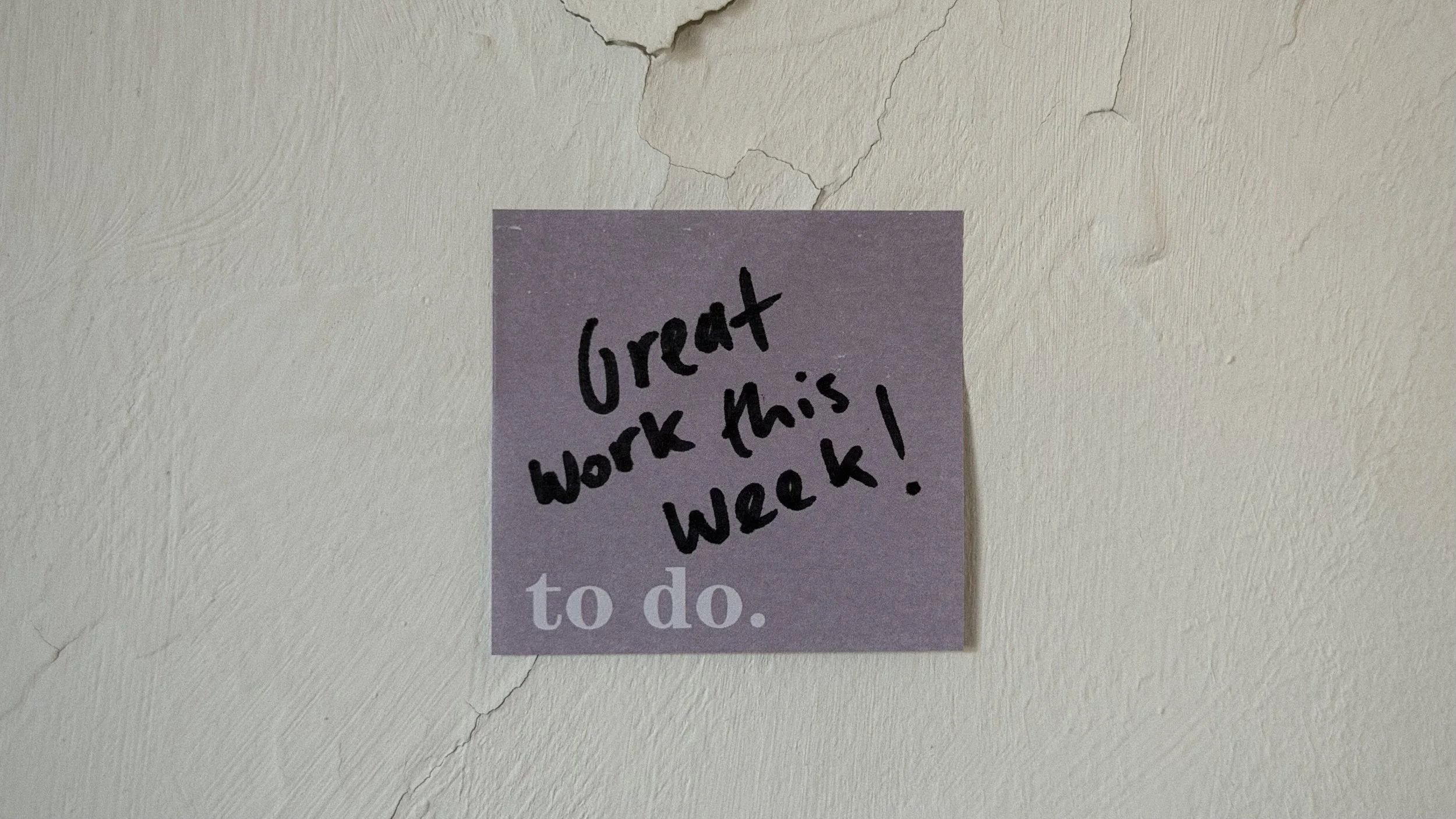
Praise is supposed to be uplifting. Supportive. Motivating. Then why does hearing it make your stomach sink?
How you interpret the compliment determines how you will feel about it. If you interpret it as a threat, it will feel like one.
Let’s take a closer look at this.
Leah* is reliable, well regarded in the office and known to be a good worker. After all, she’s disciplined, loves to learn and has been in the tech industry for almost two decades. For the last few months, she’s been working extra hard towards a promotion into a more senior management role. One morning she opens her laptop and sees an email from her boss:
“Great news, Leah. Your org has been producing stellar results lately - your colleagues can well and truly learn something from you and you’re definitely on track for more.”
Her heart sinks.
Instead of feeling happy, proud, or validated, she felt very uneasy. “Can I maintain this?” was the first thought that elevated her heart rate. She hadn’t been actively thinking about exactly what standard she’d been working at but now that it had been named the thought spiral was picking up speed. The pressure was rising in real time as she sat there and stared blankly at the screen. Her heart was pounding. “Have I set a standard that I now have to keep proving I can meet?” she thought, as a nearby clock came into focus in her field of vision. She was already two minutes late for her next meeting as her mind jumped to the next fear: “Will my KPI targets go up now?” She hurriedly pushed her worries into that familiar place in the back of her mind and closed the imagined vault door. Next, she stood up, put the smile back on her face and confidently made her way to the meeting. Her stomach was still queasy but she was sure no one would notice anything.
How imposter syndrome turns praise into pressure
Someone experiencing imposter syndrome typically finds it difficult to internalise their own successes (1). Successfully meeting the standards they hold themselves to can often feel just normal, banal or even insignificant, which may leave someone open to the fear of getting it wrong next time. Falling short of those standards, however, can carry disproportionate weight: a single failure can challenge self-esteem and feel like a verdict on who they are (2).
So what happens when someone else raises the standard for you? Let’s start somewhere familiar.
Do you know that feeling when you get a gift from someone close to you, even though you were sure that the agreement was ‘no presents this year’? Think for a moment about what name you would give to that feeling. Now imagine, this happens for the third year in a row. You have received three gifts from this person and you got them nothing on all three occasions. The gap that formed during the first year is widening. Initially you might have felt like you owed them a gift back, roughly of the same value or slightly more depending on how heavily you felt the feeling you named. But now after three years? Oof. The thought is even giving me second-hand guilt as I’m writing this.
Together with the ‘I owe you something’ feeling comes the fear. “What if they are secretly upset with me?”, “What if it comes up in an argument?”, “What might they be thinking about me?”. A lot of unknowns. But one thing is clear: a standard has been created and it’s unflattering. You receive and you don’t give back. That’s the trend of three years. Both sides know this. There are many parts of this that are left unspoken (otherwise it probably wouldn’t have come to three years). I realise that it’s very unlikely that you’ve ever created this standard. After all, the “what if” thoughts can be a strong motivator to act. Whatever feeling you named, multiplied by three is the important part to connect with. Bear with me as we look at another example.
Now imagine Johnny, who’s currently hunting for a new job. The labour market is swamped with job seekers due to recent layoffs so it’s been really tough for him. Out of fear he’ll never find a new job, he optimised his CV a bit more generously than he normally would. He rounded up numbers of past achievements. He even claimed his management role was M5 when really he was M4 at the last company he worked at. He wanted to stand out. It worked. He started getting more interviews, which solved his original problem, but it set up the next. The questions he was asked by the hiring managers required him to build on the small fibs from his CV. He heard praise for achievements that he knew were less impressive than what he claimed. He was operating on a standard that didn’t belong to him. He knew it was fake and he could swear that his nervous answers gave it all away to the interviewers. He didn’t get any offers from this round of interviews and instead the pressure grew.
Leah prides herself as an honest person. The way she talks about her work is realistic and grounded in what she actually does from 9 to 5ish. If anything, she undersells it because in her family of origin, bragging was heavily frowned upon. The point is that she doesn’t lie or embellish and never would because she values honesty and personal integrity. Then why does the standard stress her out so much? It’s the belief that others overestimate her competence (3). That they might think she’s better than she really is. She doesn’t really need praise because she knows she’s a hard worker but now that a standard has been named, she’s terrified that the standard is bigger than her. Especially now that her boss is elevating her over her colleagues. Now that her boss called out that she’s on track for more. Her instinctual response is to work harder. She’s cleared this kind of bar before, so she’ll prove that the standard belongs to her.
But what if it already does?
There are four things going on here:
Mind reading (4): believing with relative certainty that another person believes something specific about you or something you’re involved in
Performing a specific role (5): acting outwardly in ways that protect a reputation you believe others hold about you (this often gets called a mask)
Outpaced self-image (6): seeing yourself differently to how others generally perceive you, usually because of holding on to an outdated identity
Identity mismatch (7): identity gets verified from external feedback. If something like praise doesn’t match our self-image, that creates a felt mismatch
If Leah believes that her boss overestimates her capabilities, she feels compelled to work harder so that she can protect how her boss views her. In other words, the praise raises the standard she needs to meet in order to protect her reputation. The reason the praise feels uncomfortable on a visceral level is that it’s a mismatch between how she sees herself and what the praise says about her. Rejecting or discounting the praise protects and preserves both the self-image she holds and the overwork done in the past to meet the rising standard. Leah has done that all her life. Neatly tucking the compliments into the vault in her brain and closing it. As you can imagine, the vault is pretty full at this point but her long-standing self-image holds: I’m not good enough so I need to work harder to prove myself.
The gift example showed you what a growing debt can do to a person. The growing standard is that debt. If you believe your boss’s opinion of you keeps growing and the gap between how you think they see you and how you see yourself keeps getting wider, that’s a jarring feeling.
Johnny’s story showed how little lies produce praise that doesn’t feel earned. The standard is inflated and he secretly knows why. He feels like a fraud because in this example he is one. That creates pressure. In Leah’s example something similar happens; however it doesn’t come from a lie but instead from an outdated identity that, to her, creates a mismatch with reality. She feels fake in a similar way to Johnny, though the circumstances are very different.
Simplified explanation: the internal pressure rises from praise because the standard you believe you must meet to protect your reputation has also just gone up.
This is how competent high achievers can end up in burnout territory: a bar that keeps rising means someone keeps working harder to meet it. Where’s the ceiling? How far up can this bar go? Usually until a breaking point is hit and the bar gets reset, as the only next step is recovery. The standard was met, but at what cost?
What can be done to stop feeling pressure from praise?
The most practical way: reduce the fear of negative judgement. Easier said than done, I know, but a good place to start.
How can that be done? Start getting really specific about your own successes. Perhaps it could be useful to document your wins in this format:
What I objectively did well:
What I specifically did to achieve this:
What the impact was on my career:
What this does is it builds specificity. Your successes start feeling less abstract. It becomes more difficult to attribute your accomplishments to luck (8) when you can clearly and specifically name the work you did and the outcome it produced. Feeling more secure in your accomplishments will create less doubt about your own competence, which makes negative judgement sting a lot less. A bonus of getting specific about your work is also that it will make upcoming performance reviews at work a breeze (I know they cost you a lot of time in the past).
I’ve also built a free diagnostic that helps you get to the bottom of why specifically you overcommit at work. On the outside, you’re saying yes to more work. You’re working harder to meet that bar. You now understand the general mechanism at play and the diagnostic gives you the next step for getting specific on why you find it so hard to protect your time. It’s called Say Yes & Mean it. It comes with a 3-minute coaching video I recorded and you can try it here.
If you’ve done the self-help and it hasn’t got you the result you want, the next step is to work with a specialised professional on this. Identity development usually falls outside of what self-help books and AI generated advice can do. I know this because self-help didn’t do what I needed it to do for me for many years. Yes, self-help supported me to think better and build better habits, but I hit a ceiling when it came to identity topics. In many ways it actually kept me stuck. Hiring a coach/therapist who specialises in supporting imposter syndrome and identity is strongly recommended if this article feels like it was written for you. Someone who doesn’t fully understand the mechanisms at play may accidentally make you feel worse with more praise (the opposite of what you need). I offer a free 45-minute initial call where we get clear on your specific pattern and talk next steps if we both think I can help you.
Just like this article, my work focuses on the structure of your experience. Understanding yourself is important but incomplete without taking the right next steps. If you self-sabotage and that blocks your next steps, whatever way you want to move forward may subconsciously threaten your identity; just like discounting a compliment protects how you see yourself.
If you enjoyed this article and want to understand the wider imposter syndrome pattern(s), this other article I wrote is the next one for you: Imposter syndrome is not a confidence issue.
About the author - Chris Baeuchle
MSc Personal & Management Coaching, UCC
7+ years tech leadership (Apple, Indeed, komoot)
International Association of Mind Coaches
*Leah and Johnny are fictional characters partly inspired by real events. Their stories reflect patterns I regularly see in my work.
Sources:
(1) Brauer, K., & Proyer, R. T. (2022). The impostor phenomenon and causal attributions of positive feedback on intelligence tests. Personality and Individual Differences, 194, Article 111663. https://doi.org/10.1016/j.paid.2022.111663
(2) Neureiter, M., & Traut-Mattausch, E. (2016). An inner barrier to career development: Preconditions of the impostor phenomenon and consequences for career development. Frontiers in Psychology, 7, Article 48. https://doi.org/10.3389/fpsyg.2016.00048
(3) Tewfik, B. A., Yip, J. A., & Martin, S. R. (2025). Workplace impostor thoughts, impostor feelings, and impostorism: An integrative, multidisciplinary review of research on the impostor phenomenon. Academy of Management Annals, 19(1), 38–73. https://doi.org/10.5465/annals.2023.0100
(4) Neenan, M., & Dryden, W. (2020). Cognitive behavioural coaching: A guide to problem solving and personal development (3rd ed.). Routledge.
(5) Hill, A. P., & Gotwals, J. K. (2025). A meta-analysis of multidimensional perfectionism and imposter phenomenon. Journal of Research in Personality, 118, Article 104639. https://doi.org/10.1016/j.jrp.2025.104639
(6) Atkin, K. (2025). The imposter phenomenon: Why you feel like a fraud and what you can do about it. Pearson.
(7) Burke, P. J., & Stets, J. E. (2023). Identity theory (2nd ed.). Oxford University Press. https://doi.org/10.1093/oso/9780197617182.001.0001
(8) Zanchetta, M., Junker, S., Wolf, A.-M., & Traut-Mattausch, E. (2020). “Overcoming the fear that haunts your success”: The effectiveness of interventions for reducing the impostor phenomenon. Frontiers in Psychology, 11, Article 405. https://doi.org/10.3389/fpsyg.2020.00405